When people imagine Tantra for couples, the image presented is often a man and a woman. Much of the language around Tantra also uses masculine and feminine symbolism, which can unintentionally create the impression that tantric intimacy belongs to one particular kind of relationship. In my work, I do not see it that way. Tantra …
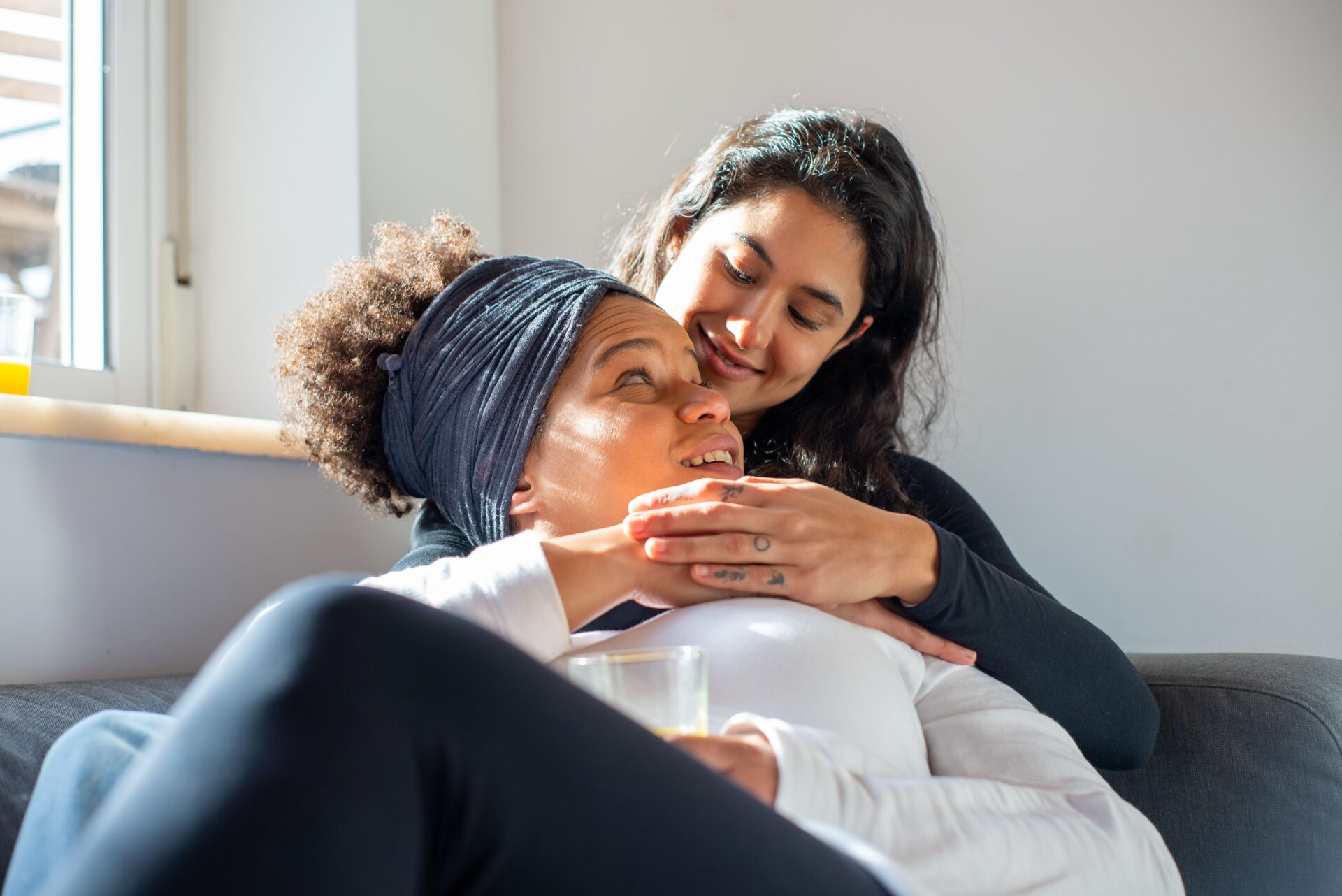
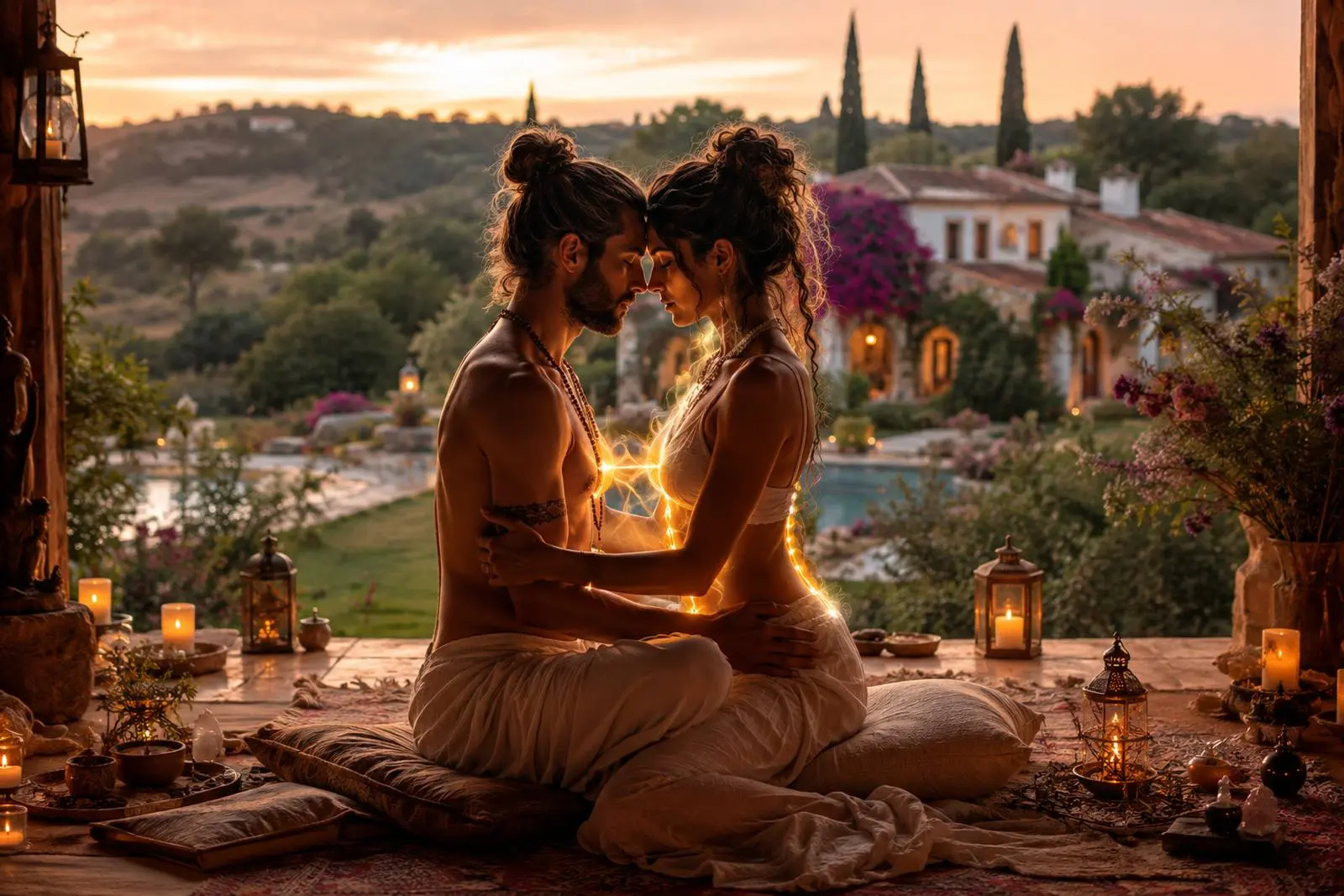
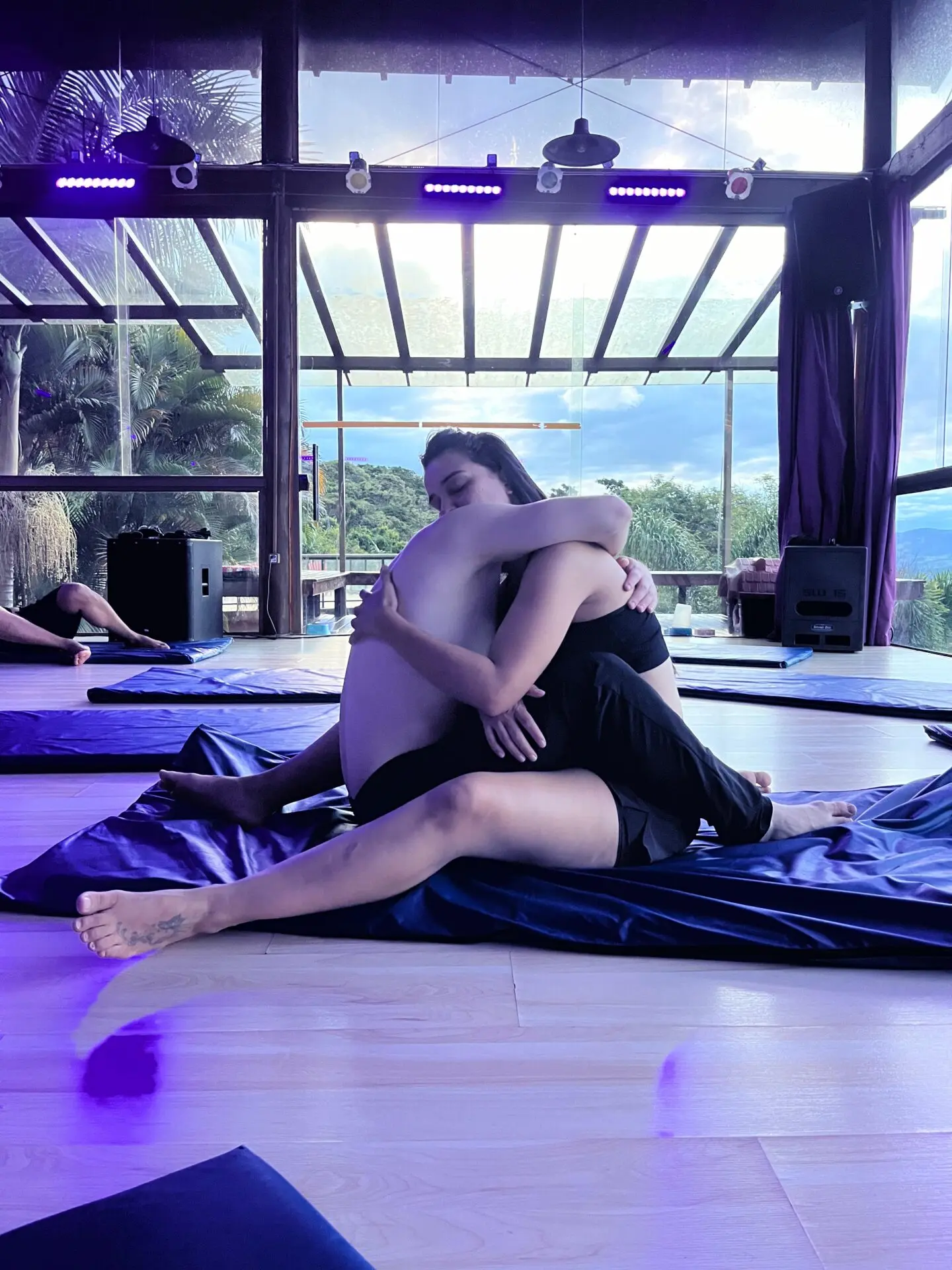
When people imagine Tantra for couples, the image presented is often a man and a woman. Much of the language around Tantra also uses masculine and feminine symbolism, which can unintentionally create the impression that tantric intimacy belongs to one particular kind of relationship. In my work, I do not see it that way. Tantra can be explored by women with women, men with men, women with men, and couples across different sexual orientations, gender identities and relationship expressions. What matters is not whether a couple fits a predetermined image, but how two people meet each other through presence, consent, curiosity, touch and the body.
This understanding is also part of how I created Kāmarasa — Multi-Orgasmic Tantric Training for Couples. The experience is centred on partners learning together and exploring within their own relationship. Tantra does not need to tell us what a couple should look like before teaching us how to become increasingly aware of the person already beside us.
1. Tantra Is Not Only for Heterosexual Couples
Tantra works with experiences that belong to human bodies: awareness, sensation, breath, movement, touch, pleasure, arousal, communication and sexual energy. None of these experiences belongs exclusively to heterosexual relationships.
Two women can explore conscious touch, giving and receiving, breath and orgasmic awareness together. Two men can explore these practices together. A woman and a man can explore them together. Partners whose gender identities do not fit neatly into these categories can also develop their own relationship with tantric practice.
The practice begins with the people who are actually present.
2. Intimacy Does Not Need Fixed Gender Roles
One aspect I find particularly valuable in couples work is allowing partners to explore intimacy without automatically deciding who should lead, receive, initiate or surrender according to gender.
One partner can give while the other receives, and those roles can change. One person can be active in one practice and receptive in another. Both partners can discover what happens when they are not performing a role they believe is expected of them.
In the way I teach Tantra, giving and receiving are experiences, not gender roles.
This can be especially interesting for couples who have unconsciously developed fixed patterns around initiation, touch and pleasure. Changing the way we participate can reveal something new about ourselves as well as about our partner.
3. What About Shiva and Shakti?
Tantric traditions contain rich symbolism around Shiva and Shakti, and these principles are often described through masculine and feminine imagery. I value these teachings, but I do not believe they need to become rigid instructions that say man equals Shiva, woman equals Shakti, or that every intimate practice must reproduce a heterosexual dynamic.
Shiva and Shakti can help us explore qualities of consciousness and energy: stillness and movement, awareness and expression, presence and creative force. Within intimate practice, partners can encounter different qualities within themselves rather than being confined to one side because of their sex or gender.
For me, respecting tantric philosophy and welcoming diverse couples do not contradict each other. We can honour traditional symbolism without turning it into a limitation on who is allowed to experience Tantra.
4. Conscious Touch Has No Sexual Orientation
Touch is one of the places where these ideas become embodied rather than theoretical. Through Authentic Tantra Massage by May Gonzalez, I teach touch through awareness, sensitivity, rhythm, pressure, breath, communication and the capacity to notice how another body responds.
These principles are not dependent on the gender of the person giving or receiving. The hands learn to listen to the body that is actually beneath them rather than following assumptions about how a man or woman is supposed to respond.
This is why I often return to a simple principle in my teaching: technique gives the hands possibilities; awareness teaches the hands when and how to use them.
When partners learn to touch this way, the practice becomes personal because every body communicates differently.
5. Different Bodies Create Different Explorations
Being inclusive does not mean pretending every body is anatomically identical or that every couple needs exactly the same practice. Bodies are different, genitals are different, sensitivities are different, and the ways people experience pleasure and arousal are different.
Two men may encounter certain practices differently from two women. A woman and a man may have another experience. Individual differences within couples can be just as significant as differences between genders.
Inclusive Tantra does not mean pretending that every body is the same. It means meeting each body as it is.
This is particularly important when working with intimate touch and sexual wellbeing. Instead of forcing every couple through an identical idea of sexuality, the practice can respond to anatomy, boundaries, comfort, curiosity and the individual experience of each partner.
6. Pleasure Does Not Have to Follow One Sexual Script
Ideas about what “counts” as sex can also become surprisingly narrow. Sexuality is often organised around a familiar progression toward genital stimulation, penetration and climax, but pleasure can be experienced through a much wider landscape of the body.
Tantric exploration can include the senses, breath, movement, sound, anticipation, conscious touch, arousal awareness and sexual energy. It can help couples become curious about how pleasure develops rather than measuring an intimate experience by whether a particular sexual act happened.
This becomes especially relevant when we stop assuming that every couple has the same anatomy or should follow the same sexual script. The question becomes less about what partners are supposed to do and increasingly about what these two particular bodies can discover together.
7. Multi-Orgasmic Exploration Is About Capacity, Not Gender
Multi-orgasmic exploration can also become trapped in gender assumptions. Women may be described as naturally multi-orgasmic while men are taught to think of ejaculation as the inevitable conclusion of sexual pleasure. Real bodies and sexual responses are considerably more individual.
Within my work, multi-orgasmic exploration begins before we start counting orgasms. It begins with awareness of arousal, sensation, breath, movement, sound and the ability to remain present with different waves and intensities of pleasure.
For me, multi-orgasmic exploration begins with the capacity to feel.
This principle is central to Kāmarasa because it allows each couple to explore from the bodies they actually have rather than comparing themselves with an ideal of how a man, woman or tantric couple should experience orgasm.
8. Communication and Consent Belong to Every Couple
Regardless of gender or sexual orientation, intimate exploration requires communication. Partners need to be able to express what feels pleasurable, what does not, where a boundary exists, when they want something to continue and when they want it to stop.
Tantra should never be used to pressure someone into a practice because it is supposedly spiritual, liberating or necessary for growth. Consent remains consent inside a tantric space.
Learning to say slower, softer, stay there, pause, continue, yes or no can be as important as learning any technique. The goal is not to perform Tantra correctly but to develop a relationship in which both bodies can participate with awareness and choice.
9. You Do Not Need to Fit the Image of a “Tantric Couple”
There is no particular appearance, sexuality or relationship dynamic that makes two people sufficiently tantric. You also do not need previous Tantra experience or an already adventurous sex life to become curious about this work.
What matters to me is that partners want to explore together, respect each other’s boundaries and are willing to approach intimacy with curiosity.
A couple can arrive with very different bodies, histories and ways of expressing sexuality. The practice does not need to erase those differences. It can create space to understand them.
10. Tantra Can Become Your Own Shared Exploration
Ultimately, I want couples to take what they learn and make it relevant to their own relationship. Conscious touch, giving and receiving, breath, communication, sexual energy and principles from Authentic Tantra Massage by May Gonzalez are not intended to make every couple experience intimacy in the same way.
They give partners possibilities to explore together.
That philosophy is at the heart of Kāmarasa — Multi-Orgasmic Tantric Training for Couples. Kāmarasa welcomes women with women, men with men, women with men, and couples across diverse orientations and relationship expressions. Each couple explores with their own partner, within their own boundaries and through the reality of their own bodies.
There is no single way a tantric couple has to look. There are simply two people willing to meet each other with presence, curiosity and a desire to discover together.
Explore Kāmarasa With Your Partner
I created Kāmarasa as a space where couples can explore intimacy experientially through conscious touch, the senses, giving and receiving, communication, arousal, sexual energy and multi-orgasmic awareness. You do not need to fit a particular definition of what a tantric couple should be. You and your partner are invited to explore from who you already are.
If you are curious about experiencing Tantra together in an intimate couples immersion, discover Kāmarasa and see whether the experience feels right for both of you.
The Journey Continues
What we discover through the body asks to be lived, embodied and experienced.
Kāmarasa
Expand pleasure beyond the pursuit of a single climax.
An immersive training for couples who want to expand pleasure, deepen erotic connection and develop a more conscious relationship with arousal, sexual energy and orgasm.
Pleasure does not have to end at climax. Learn to experience it as a wave.
☽Where Would You Like to Begin?
Explore the pathways below and discover the offering that speaks to where you are now.

Continue Your Journey
A complimentary e-book for deeper awareness and embodied exploration.
Send download link to:
Hi, I'm May Gonzalez.
I’m a Sacred Sexuality Educator, Somatic Sexologist and Tantra Teacher, exploring the meeting point between body, sexuality, energy and consciousness. My work brings together embodied practices, Tantra and sexual wellbeing to support a deeper relationship with pleasure, intimacy and the body.
More About Me →Instagram Journey
Ritual, embodiment, sacred sexuality and glimpses from my work and journey.