 01 INTIMATE BODY AWARENESS
Yoni Mapping
A slow, educational and body-led exploration for women who want to understand their intimate anatomy, sensations, boundaries and patterns of tension, tenderness or numbness.
An Authentic Tantra Massage can open much more than the physical body.
Through conscious touch, breath, presence and nervous-system regulation, the session may awaken sensations, emotions and memories that were previously held beneath the surface. You may leave feeling deeply relaxed, alive and connected—but the experience can continue unfolding long after you leave the space.
The days following your session are not simply an “after-effect.” They are part of the journey.
Your body may continue processing what was touched, felt, remembered or released. This is why conscious integration is so important—and why practices such as Yoni Mapping, Yoni Egg Therapy and the 7 Womb Portals journey can offer meaningful support for women who wish to continue listening to their bodies.
Every woman responds differently. You may experience several changes, only one or two, or nothing particularly intense. There is no correct way to integrate a session.
During the first ten days, you may notice:
Some women describe this period as an emotional detox. This does not mean that emotions are impurities that must be removed. It means that feelings previously suppressed, contained or disconnected from the body may finally have enough space to be acknowledged and expressed.
You are not becoming “too emotional.” You may simply be feeling what your body was not previously ready to feel.
The purpose of integration is not to analyse every sensation or force yourself to release something.
Integration is the process of allowing the experience to settle into your body, nervous system and everyday life.
Without integration, a powerful session can remain an isolated moment. With conscious integration, it can become the beginning of a deeper relationship with your body, pleasure, boundaries and emotional truth.
Integration may help you:
Rest, hydration, journaling, warm baths, gentle movement, time in nature and conscious breathing can all support this period.
Avoid pressuring yourself to understand everything immediately. The body often reveals its meaning gradually.
Many women have learned to disconnect from the pelvic region.
This disconnection can develop through shame, painful experiences, difficult relationships, medical procedures, cultural conditioning, childbirth, grief, fear, sexual pressure or years of prioritising the needs of others.
It can also appear as:
Authentic Tantra Massage can begin opening a doorway—but you do not need to walk through every layer in one session.
The next step is learning how to remain in conversation with your body.
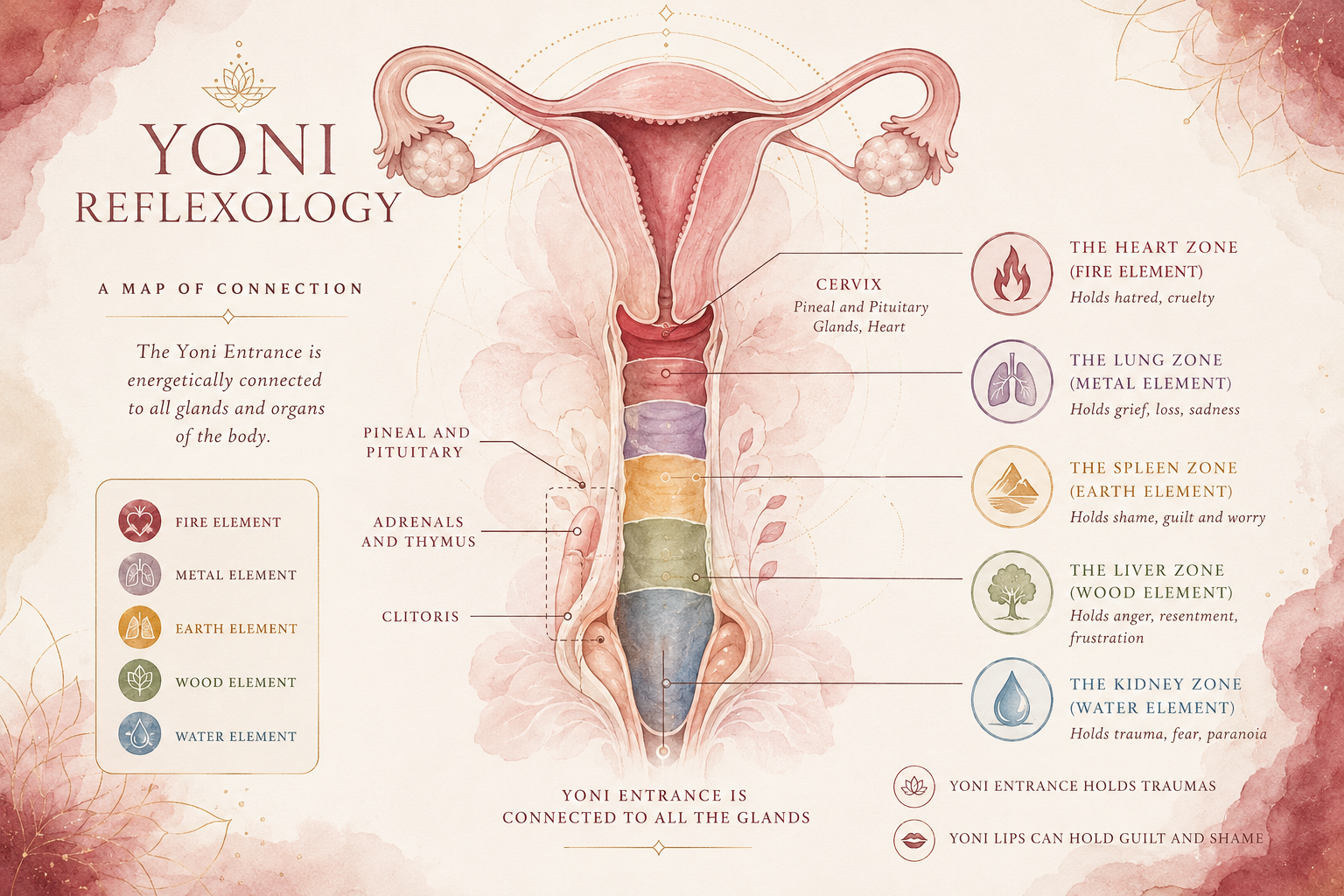
Yoni Mapping is a slow, conscious and educational exploration of the vulva, vaginal landscape, pelvic floor and the emotions or sensations associated with these areas.
It is not focused on sexual performance, penetration goals or achieving orgasm.
It is an opportunity to discover how different areas of your Yoni respond—and to recognise the full range of possible sensations, including pleasure, numbness, tenderness, tension, discomfort, emotion, warmth, resistance or absence of sensation.
Each response is meaningful information.
The purpose is not to make your body respond in a particular way. The purpose is to listen.
Yoni Mapping does not ask, “Why am I not feeling more?”
It asks, “What is my body communicating right now?”
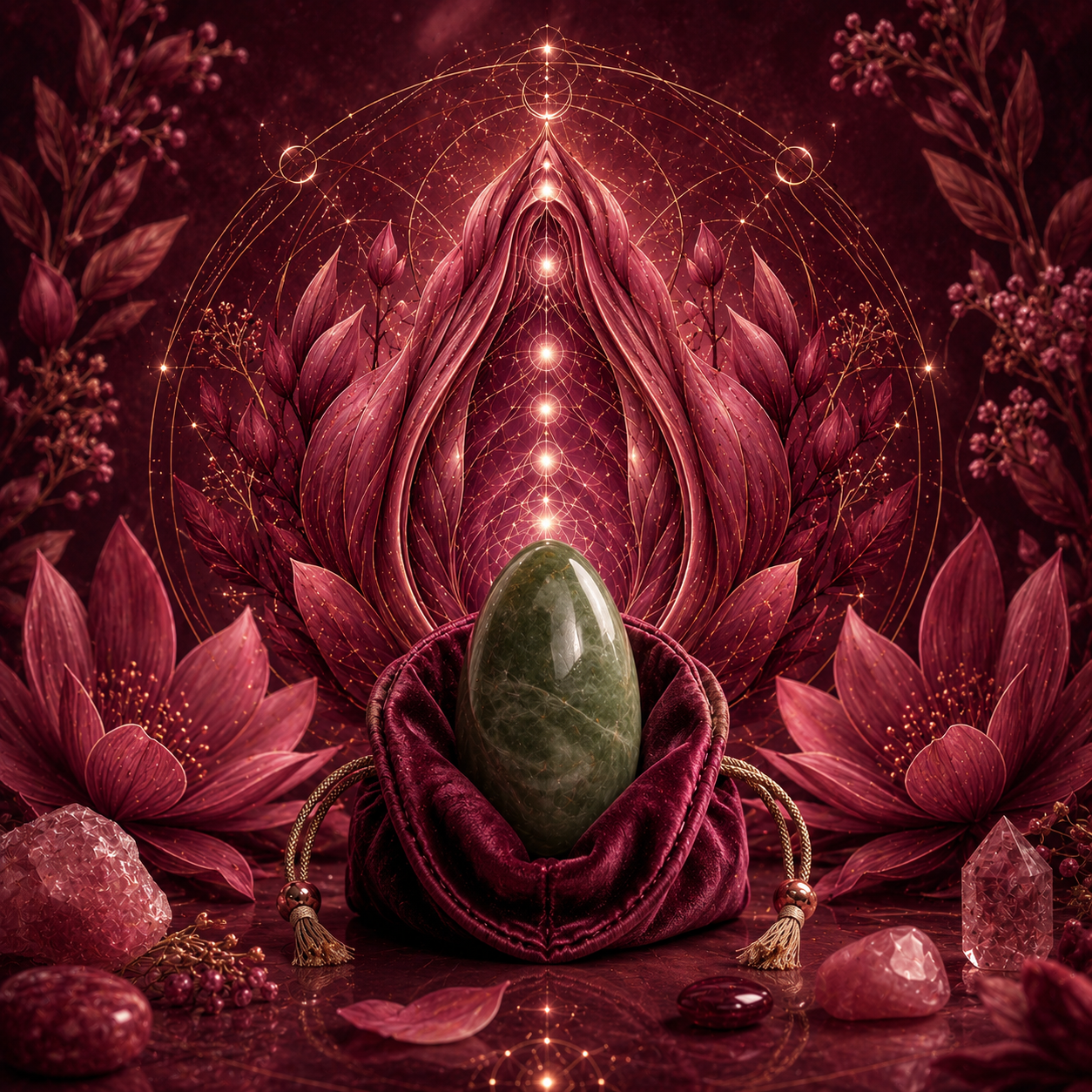
Yoni Egg Therapy is not simply about placing an egg inside the body or strengthening the pelvic floor.
When offered responsibly, it is a gradual practice of awareness, sensitivity, breath, movement and embodied listening.
The Yoni Egg becomes a tool—not the purpose of the practice.
It can help you notice how your pelvic floor responds to stress, emotion, movement, pleasure and rest. Some women constantly contract their pelvic muscles without realising it. For them, more strengthening may not be beneficial. The first step may be learning to soften, breathe and release.
This is why a personalised approach matters.
The practice is never about keeping the egg inside for as long as possible, using force or continuously contracting the muscles.
More tension is not always more strength.
True pelvic awareness includes the ability to engage, soften, respond and rest.
The womb and pelvic area can be influenced by many interconnected factors, including muscular tension, stress, nervous-system activation, hormonal changes, inflammation, past experiences and emotional wellbeing.
Gentle somatic practices may support some women by encouraging:
Yoni Mapping and Yoni Egg Therapy are not medical treatments for menstrual pain, endometriosis, fibroids, infections or other pelvic-health conditions. They should not be used to diagnose or cure pain.
Persistent, severe, unexplained or worsening pain should always be assessed by a qualified healthcare professional.
Somatic practices can complement appropriate medical care, but they do not replace it.
The body may hold patterns connected to experiences that were never fully processed.
This does not mean every physical sensation is caused by trauma, or that every emotion must be linked to a specific memory. Sometimes the body releases through tears, trembling, sound, heat, movement or deep rest without producing a clear story.
An emotional release may feel like:
The objective is not to provoke catharsis.
A powerful release is not necessarily better than a quiet experience. Sometimes integration happens as a dramatic emotional wave. At other times, it appears as a subtle change: saying no without guilt, asking for what you need, resting before exhaustion or feeling comfortable inside your own body.
Both are meaningful.
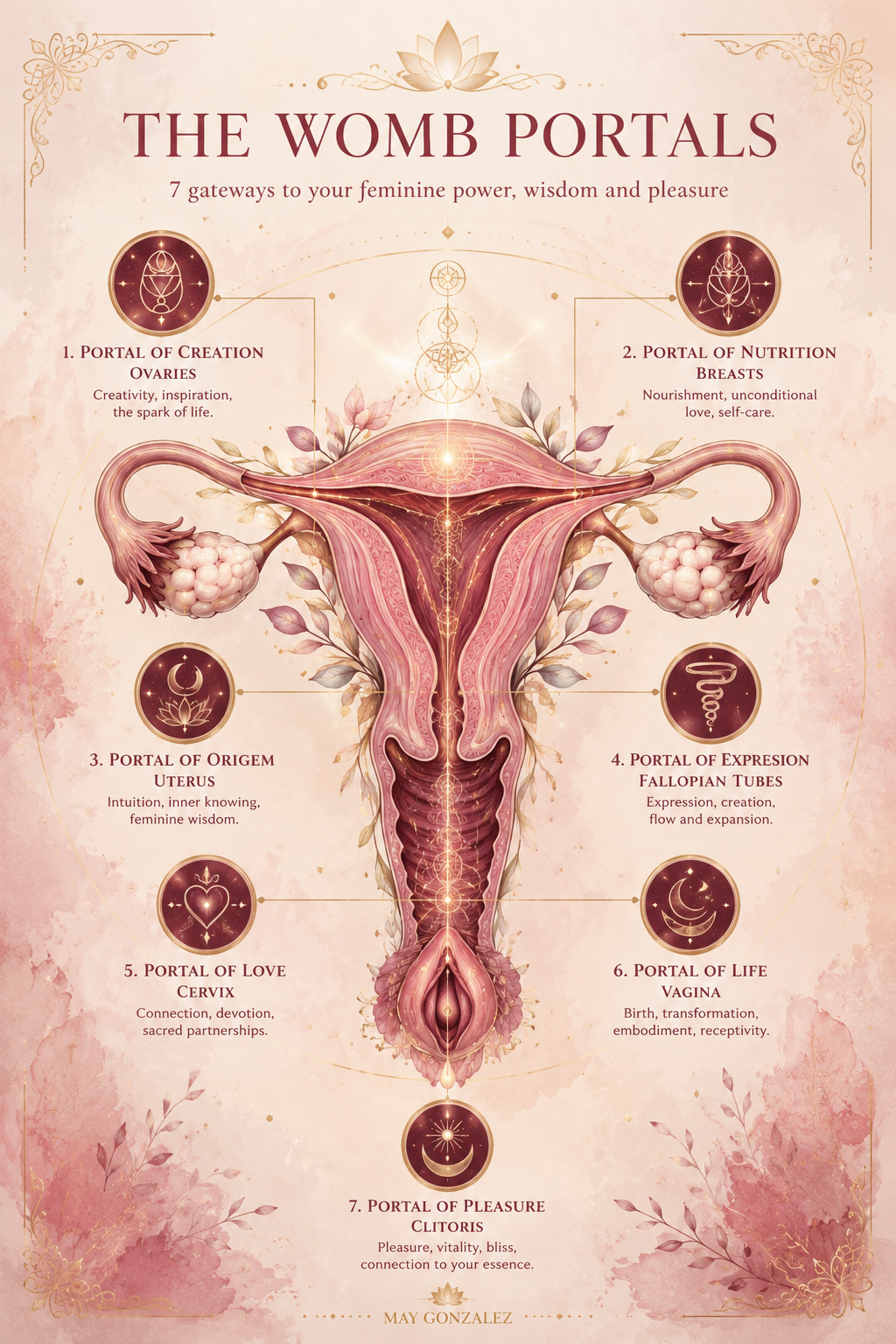
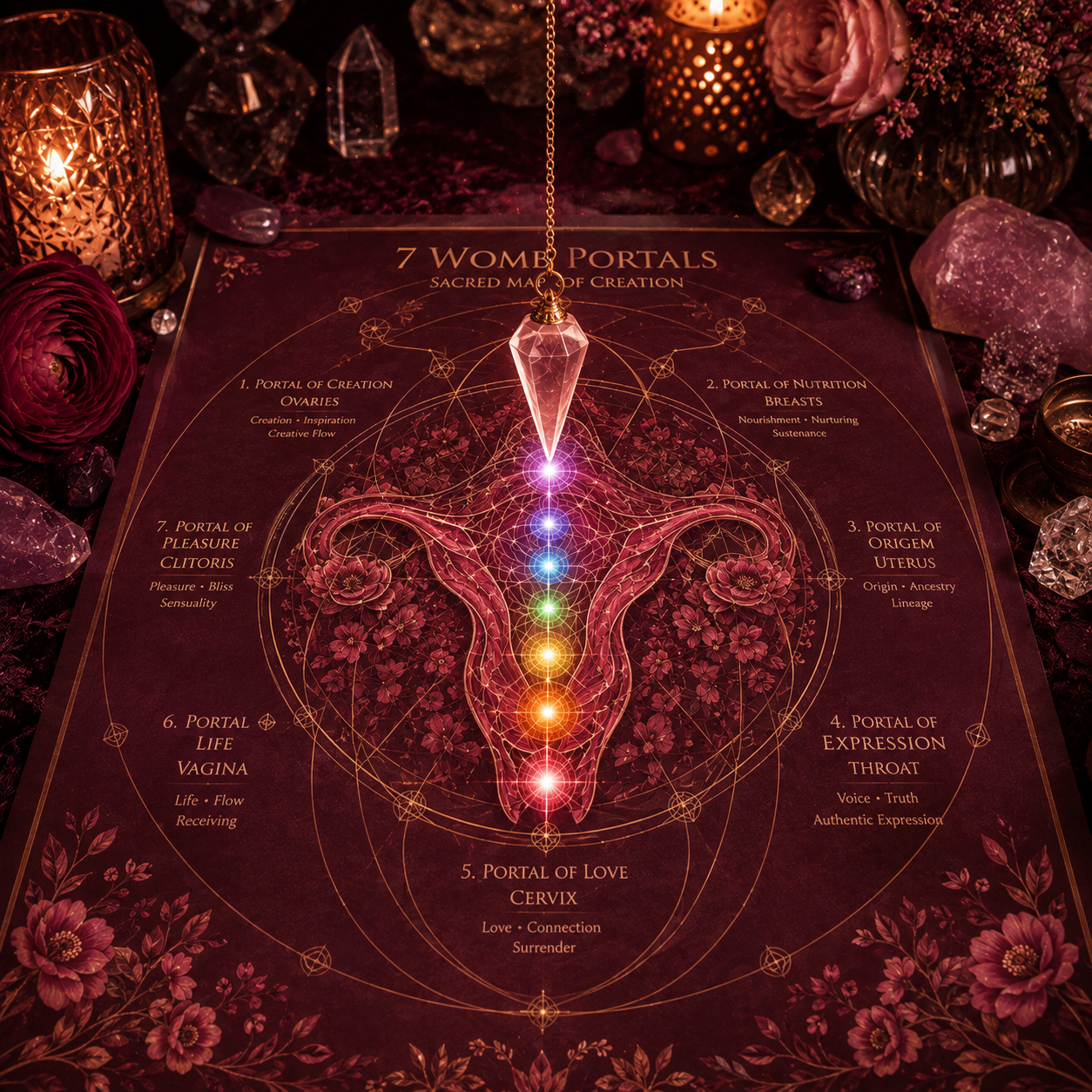
The 7 Womb Portals offer a symbolic and somatic framework for exploring different layers of the feminine experience.
This journey does not treat the womb as dirty, impure or in need of literal cleansing. “Cleansing” refers to bringing compassionate awareness to patterns, emotions and experiences that may still influence how you inhabit your body.
Each portal invites you to approach a different layer with presence rather than judgment.
The beliefs that taught you to hide your body, silence your desires, distrust pleasure or feel guilty for having needs.
This portal invites dignity, compassion and the return of intimate experience to your own hands.
The emotions that may arise after loss, disappointment, abandonment, violation, silence or years of suppressing what you truly felt.
This portal creates space for anger to become information and grief to be witnessed without being rushed.
The places where trust was broken—by a partner, family, community or even by abandoning your own needs to preserve connection.
This portal explores safety, discernment and the gradual restoration of self-trust.
The messages received about womanhood, menstruation, motherhood, sexuality, ageing, pleasure, relationships and the “correct” way to be a woman.
This portal asks which beliefs truly belong to you.
The stories carried through families and cultures: silence, sacrifice, fear, obedience, shame, emotional absence or the expectation that women must endure pain without support.
This is not about blaming previous generations. It is about recognising what you no longer wish to continue carrying.
The experiences that shaped how your body responds to closeness, touch, receiving, surrender, boundaries and trust.
This portal supports the creation of new choices without forcing the body to forget the past.
The final portal is not an end point. It is the opening of a different relationship with your body.
Here, pleasure is not limited to sexuality. It becomes vitality, creativity, intuition, movement, voice, presence and the capacity to receive life more fully.
Womb cleansing is not the removal of impurity, and your womb is not spiritually contaminated.
Within this work, cleansing means creating space to recognise and release what no longer serves your present life.
It may involve:
This is a process of awareness—not a promise of instant transformation.
Dreams can become more vivid after embodied or emotionally meaningful experiences.
You may dream about:
Dreams do not always have one fixed interpretation. They may reflect emotion, memory, imagination, daily events or the mind’s natural process of integration.
Instead of asking only, “What does this dream mean?”, you may explore:
Keep a notebook beside your bed and write down what you remember before analysing it. Sometimes the meaning becomes clearer over time.
Allow your nervous system to settle. Drink water, eat nourishing food and avoid unnecessary emotional pressure.
Ask yourself:
What does my body need today?
Notice sensations without trying to change them. Observe your breath, chest, belly, pelvis, legs and feet.
Ask yourself:
Where do I feel open, and where do I feel contracted?
Write down any emotions that have surfaced. Do not decide whether they are reasonable or acceptable.
Ask yourself:
What am I feeling beneath the first emotion?
Notice where you automatically say yes, explain yourself or prioritise another person’s comfort.
Ask yourself:
What would an honest boundary feel like in my body?
Place your hands gently over your lower abdomen. Breathe naturally and listen without demanding an answer.
Ask yourself:
What have I been asking my body to carry?
Allow the pelvis, spine, shoulders and jaw to move gently. Hum, sigh or make a soft sound if it feels natural.
Ask yourself:
What changes when I allow my body to move and make sound?
Choose one simple sensory experience: warm water, soft fabric, music, sunlight, nourishing food or gentle self-touch.
Ask yourself:
Can I receive this without needing to achieve anything?
Reflect on the ways you seek closeness, avoid vulnerability or disconnect from your needs.
Ask yourself:
Where do I leave myself in order to remain connected to another person?
Write down what you genuinely want more of—and less of—in your intimate and emotional life.
Ask yourself:
What would I choose if I trusted my own sensations?
Review the previous days. Notice any changes in your emotions, body, dreams, boundaries or understanding.
Ask yourself:
What has become clearer since my session?
Authentic Tantra Massage, Yoni Mapping, Yoni Egg Therapy and the 7 Womb Portals are distinct experiences, but they can complement one another.
Offers a full-body experience of presence, conscious touch, breath, nervous-system regulation and embodied awareness.
Allows the experience to settle and helps you understand what emerged physically and emotionally.
Deepens your knowledge of intimate anatomy, sensation, boundaries, tension, numbness and pleasure.
Develops an ongoing personal practice of pelvic awareness, breath, movement, sensitivity and conscious connection.
Creates a wider emotional and symbolic journey through beliefs, memories, inherited patterns, boundaries, grief, pleasure and feminine identity.
Together, these practices can support a gradual return to the body—not as an object to correct, but as a living source of information, intelligence and choice.
This work may resonate with you if you:
You do not need to be sexually experienced, spiritually experienced or comfortable with every part of your body.
You only need curiosity, consent and a willingness to move at your own pace.
Emotional sensitivity after a session can be a natural part of integration, but you should not feel that you must manage everything alone.
Please seek appropriate professional support if you experience:
Medical symptoms require medical assessment. Significant trauma responses may require support from a qualified trauma-informed mental-health professional.
Somatic and Tantric practices can be complementary, but they are not substitutes for medical or psychological care.
Yoni Egg practices may not be suitable during pregnancy, active infection, unexplained bleeding, immediately after pelvic surgery or childbirth, or when advised against by a healthcare professional. Personal guidance is recommended before beginning.
There is no reward for going deeper, faster.
You never need to force a sensation, retrieve a memory, endure discomfort or perform an emotional release.
You can pause.
You can change your mind.
You can decide that a practice is not right for you.
You can feel pleasure without continuing.
You can feel nothing and still be listening.
Your body is not a problem to solve. It is a relationship to cultivate.
Learning to observe your menstrual cycle is an important part of reconnecting with your body.
Your cycle can reveal valuable information about your energy, emotions, sensuality, creativity, need for rest, boundaries and intimate wellbeing. Through cycle mapping and journaling, you can begin to recognise your personal patterns and understand how your body communicates throughout the month.
This awareness may help you:
You do not need to fit your experience into a perfect cycle or follow a rigid model. The purpose is to understand your own rhythm.
Menstrual cycle mapping and guided journaling are introduced within my Womb Consciousness journey.
You will learn how to observe and record your cycle in a simple and personal way, exploring the connection between menstruation, emotions, pelvic sensations, desire, dreams, boundaries and your everyday experiences.
This is not only about knowing when your next period will arrive. It is about learning the language of your body and building a deeper relationship with your womb, Yoni and feminine experience.
Womb Consciousness can also support women with irregular cycles, women using hormonal contraception and women in perimenopause or menopause. The practice is adapted to your body and present stage of life.
Reading can offer language, context and new perspectives for experiences that may be difficult to understand through sensation alone.
The following books explore female sexual energy, intimate anatomy, pelvic awareness, pleasure and embodied self-knowledge. Not every book uses the term Yoni Mapping in the same way I use it in my work, and some reflect particular Taoist, Tantric or medical perspectives. I encourage you to read with curiosity while continuing to listen to your own body.
Mantak Chia and Maneewan Chia
A foundational introduction to Taoist practices for women, exploring sexual energy, breath, internal awareness and the conscious cultivation of feminine vitality. It offers helpful historical and energetic context for practices often associated with the Yoni Egg.
Minke de Vos
A practical and accessible exploration of Taoist and Tantric practices for female vitality, pelvic awareness, sensuality and sexual energy. The book connects physical exercises with emotional wellbeing, self-discovery and embodied feminine wisdom.
Mantak Chia and Rachel Carlton Abrams
This book explores female arousal, breath, sexual energy and the possibility of experiencing pleasure throughout the whole body. It can help women understand that pleasure is not limited to penetration or a single genital climax.
Sheri Winston
One of the most useful books for understanding female arousal and intimate anatomy. It presents the interconnected structures involved in pleasure and helps women develop a richer vocabulary for sensations that are often overlooked or misunderstood.
This is particularly valuable alongside Yoni Mapping because it supports the exploration of the Yoni as a complex sensory landscape rather than a single area with one expected response.
Elizabeth G. Stewart
A detailed medical reference about vulvar and vaginal health. It can help women distinguish between normal anatomical variations and symptoms that may require professional assessment.
This book provides an important medical complement to somatic and Tantric approaches.
Emily Nagoski
An accessible exploration of female sexuality, arousal, desire and the influence of stress, context and emotional safety.
It can be especially helpful for women who have questioned their level of desire, compared themselves with others or believed that their bodies were responding incorrectly.
Uma Dinsmore-Tuli
A rich exploration of Yoga, Tantra, feminine embodiment, menstruation, life transitions and the wisdom of the female body.
This book offers a broader context for understanding the Yoni and womb as part of a woman’s physical, emotional, cyclical and spiritual experience.
Jane Simpson
A practical introduction to pelvic-floor health and the different ways pelvic dysfunction can affect women.
It reinforces an essential principle of Yoni Egg Therapy: the pelvic floor does not always need more contraction. Some women need coordination, awareness and relaxation rather than additional strengthening.
Lori A. Brotto
This book explores how mindfulness can support desire, arousal and sexual wellbeing. It is particularly relevant for women who feel distracted, disconnected from their sensations or under pressure to perform during intimacy.
Its emphasis on present-moment awareness complements the slow, non-goal-oriented approach of Yoni Mapping.
You do not need to agree with every teaching or complete every exercise.
As you read, you may ask yourself:
Choose one book at a time and allow the information to settle. You may wish to keep a journal for sensations, questions, dreams, memories and discoveries that arise during your reading.
Not every traditional exercise is appropriate for every body.
Avoid using a Yoni Egg to push through pain, numbness, emotional distress or pelvic tension. Longer practice is not necessarily better, and continuously squeezing or attempting to hold the egg inside can increase tension in an already overactive pelvic floor.
The safety and cleanliness of the material also matter. Many crystals and natural stones may contain small fissures or be difficult to clean completely. Seek personalised guidance and choose a product specifically designed for safe intimate use rather than relying only on spiritual or commercial claims.
Do not use an internal Yoni Egg practice during active infection, unexplained bleeding or pain, immediately following childbirth or pelvic surgery, or when advised against by a healthcare professional.
If you experience persistent pain, urinary symptoms, pelvic pressure, unusual discharge or discomfort during insertion, discontinue the practice and consult an appropriate doctor or pelvic-health physiotherapist.
Books can provide knowledge and inspiration, but they cannot assess your individual pelvic-floor needs. Your practice should always be guided by consent, comfort and the responses of your own body.
The session may reveal a doorway. These journeys offer different ways to continue listening to your body, exploring what emerged and receiving support at the depth that feels right for you.
01 INTIMATE BODY AWARENESS
A slow, educational and body-led exploration for women who want to understand their intimate anatomy, sensations, boundaries and patterns of tension, tenderness or numbness.
 02 PELVIC AWARENESS
A personalised practice of pelvic awareness, breath, movement and sensitivity that supports you in learning when to engage, soften, respond and rest.
 03 START HERE
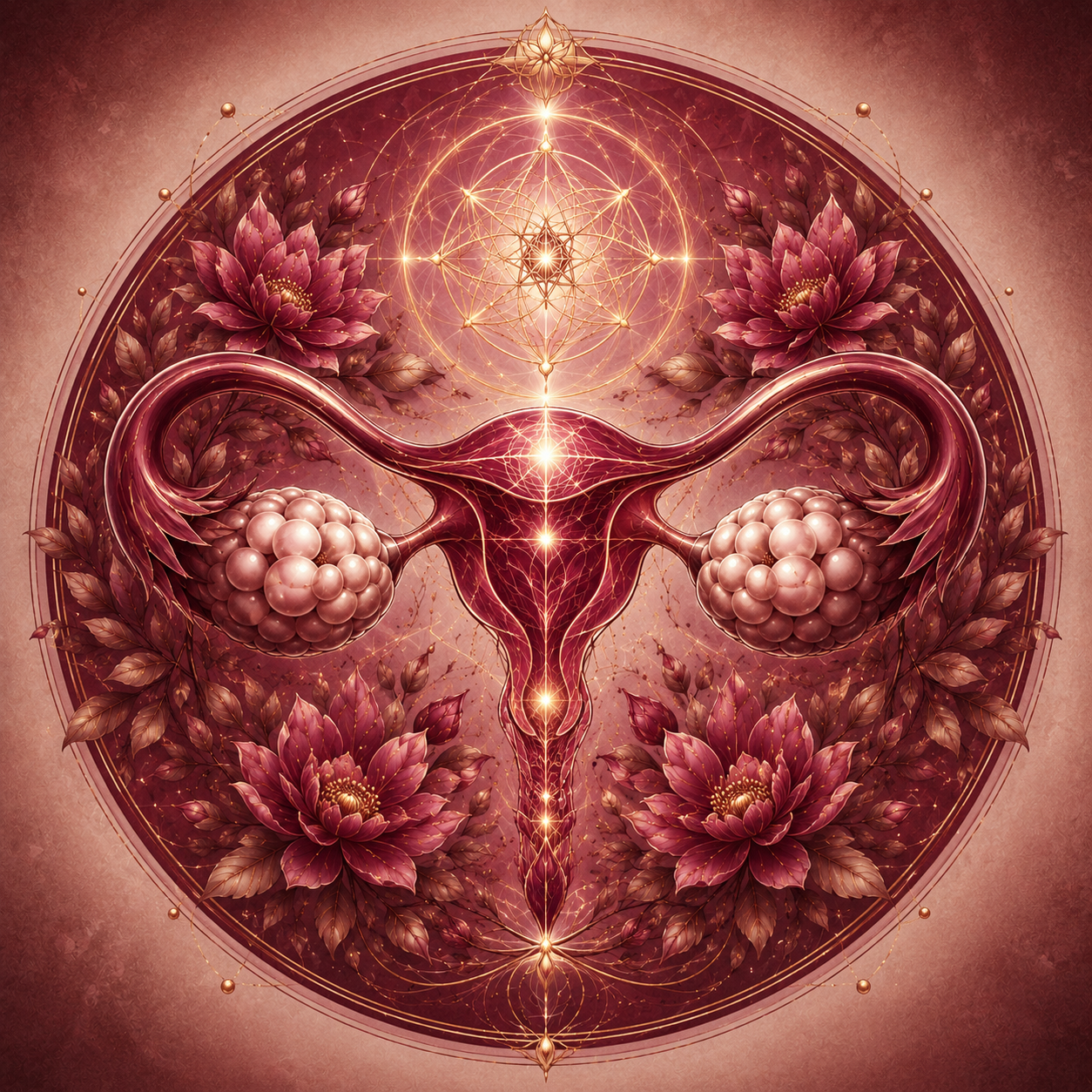
A foundational journey into your menstrual cycle, emotional patterns, pelvic sensations, dreams and the way your lived experiences are held and expressed through the body.
 04 ENERGETIC RESTORATION
An online energetic journey for women who feel weighed down by past connections, emotional residue or repeating patterns and wish to restore clarity, boundaries and inner space.
 05 THREE-MONTH MENTORSHIP
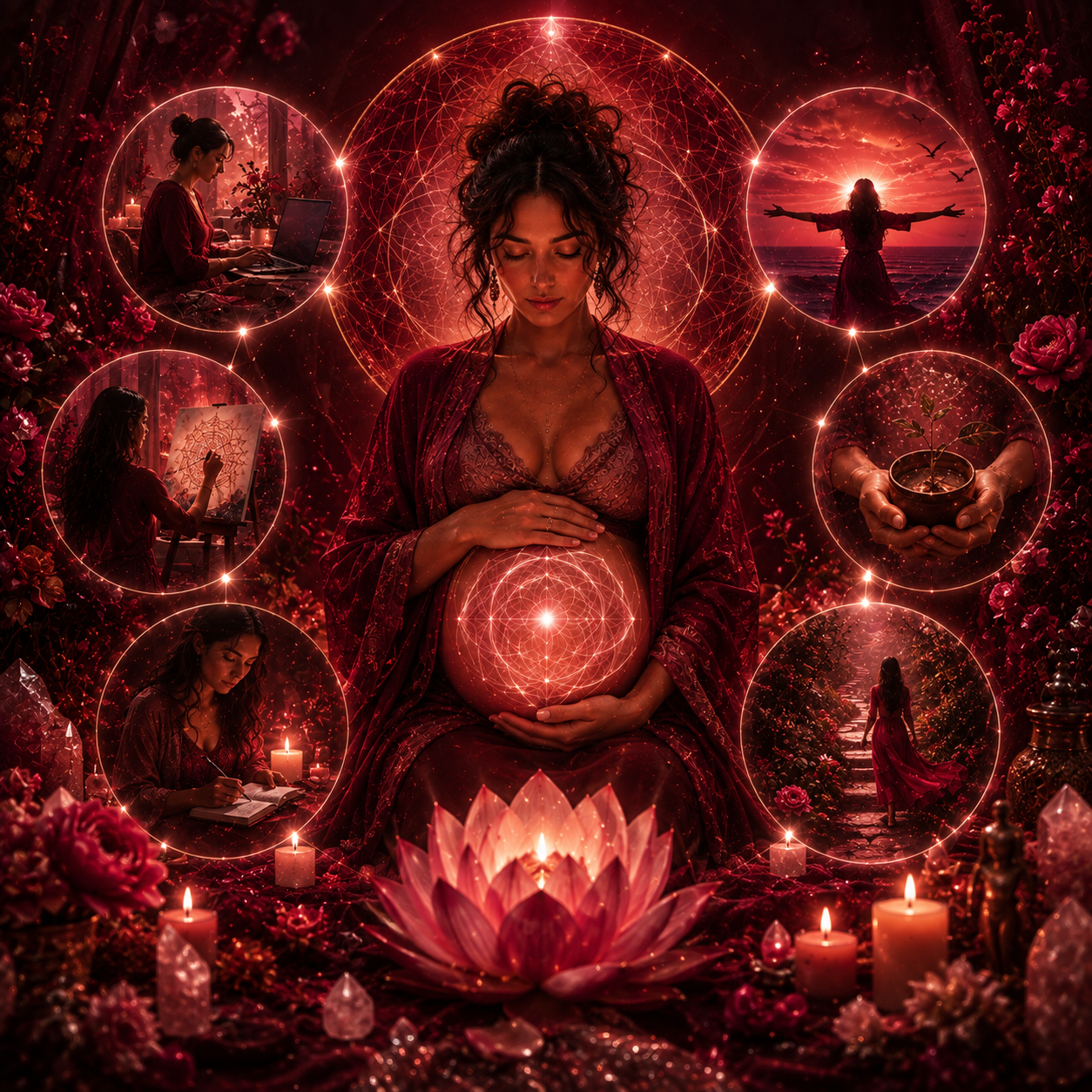
A three-month online mentorship supporting a more conscious relationship with your cycle, body, emotional landscape and fertility journey through personalised guidance and continued integration.
Your Authentic Tantra Massage may have been your first moment of truly slowing down and hearing your body.
Perhaps you felt softness.
Perhaps you discovered tension.
Perhaps emotions emerged.
Perhaps you felt pleasure, numbness, sadness, relief or something you cannot yet name.
Nothing needs to be rushed.
Yoni Mapping, Yoni Egg Therapy and the 7 Womb Portals are invitations to continue the conversation—with time, consent, education and care.
Not to become a different woman.
Not to fix a body that is broken.
But to return to the body that has been communicating with you all along.
If you would like to explore which practice is most appropriate after your Authentic Tantra Massage, you are welcome to contact me. Together, we can consider what emerged during your session, how your body has been responding throughout the integration period and which next step may best support your individual journey.
The experiences described on this page are possibilities, not guaranteed outcomes. Every woman’s body, emotional history and response are unique.
These practices are educational and complementary. They do not diagnose, treat or cure medical or psychological conditions and do not replace qualified healthcare, pelvic-health physiotherapy or mental-health support.